In Minor Keys
The 61st International Art Exhibition
of La Biennale di Venezia
-
![]()
Install, 2026
-
![]()
Install, 2026
-
![]()
Install, 2026
-
![]()
Install, 2026
-
![]()
Install, 2026
-
![]()
Install, 2026
Venice, Italy
May 9 – November 22, 2026
In Minor Keys is composed of work from 110 artists including individual artists, collaborative duos, collectives, and artist-led organizations. The exhibition’s late curator, Koyo Kouoh, selected artists from many geographies and regions with particular attention to resonances, affinity, and possible convergences between practices, even when far apart. In Minor Keys expands upon Koyo’s relational geography of encounters with artists over her lifetime.
Koyo cited several conceptual motifs as guiding the exhibition. These were not abstractly determined but rather sifted from a reservoir of art that acts deeply on the soul and mind. They brought into focus a compositional method for the exhibition, which is not organized according to sections but rather in respect of undercurrent priorities. Among these are “Shrines” – in which prominence is given to the practices of two lodestar artists while exceeding a retrospective impulse; processional assemblies; enchantment in the face of cynicism about what art can do; spiritual and physical rest opened up by the oases – the keys or small islands of artists’ universes; and finally, Koyo’s commitment to artist-centered institution building or “Schools”, in which energy and resource is directed towards a social purpose.
During the curatorial work, many ideas resonated with the literary references shared by Koyo as sources of inspiration, among them, Beloved by Toni Morrison and One Hundred Years of Solitude by Gabriel García Márquez, texts that connect in their evocation of thresholds between lifeworlds and temporalities and by a magical realism which deepens rather than distracts from an emotional register.
Rest: Themes such as the plantation, colonial settlement, environmental disaster, and geological memory traverse some of the exhibition’s works, which confront seismic events and their traces through radical and liberatory methods. The Exhibition ultimately reflects on the possibility of stepping back from the encyclopedic impulse to make room for rest, contemplation, and deep listening. Multisensory installations encourage rêverie and enchantment, inviting visitors to slow down and allow themselves to be transformed by the experience. Through oases that evoke studios, courtyards, and learning spaces, In Minor Keys conveys the spirit of a project that weaves together collaboration, generosity, and trust in the multiple dimensions of our shared humanity.
This text has been adapted from the exhibition’s official press release. The full text is accessible at https://www.labiennale.org/en/news/biennale-arte-2026-minor-keys-0.
Leading the Way, 2023
Love Justice, You Rulers of the Earth, 2025
And I Following , 2023
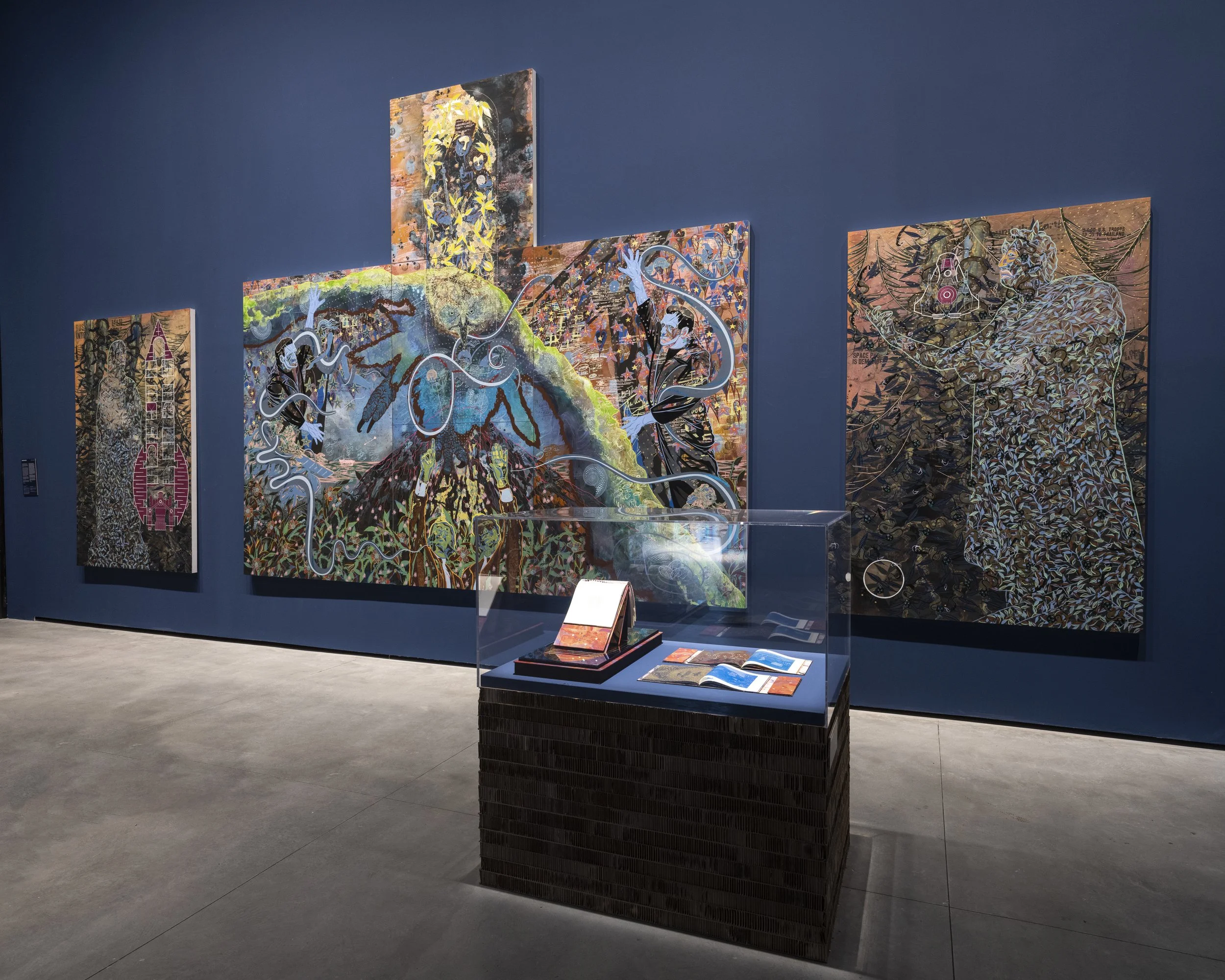
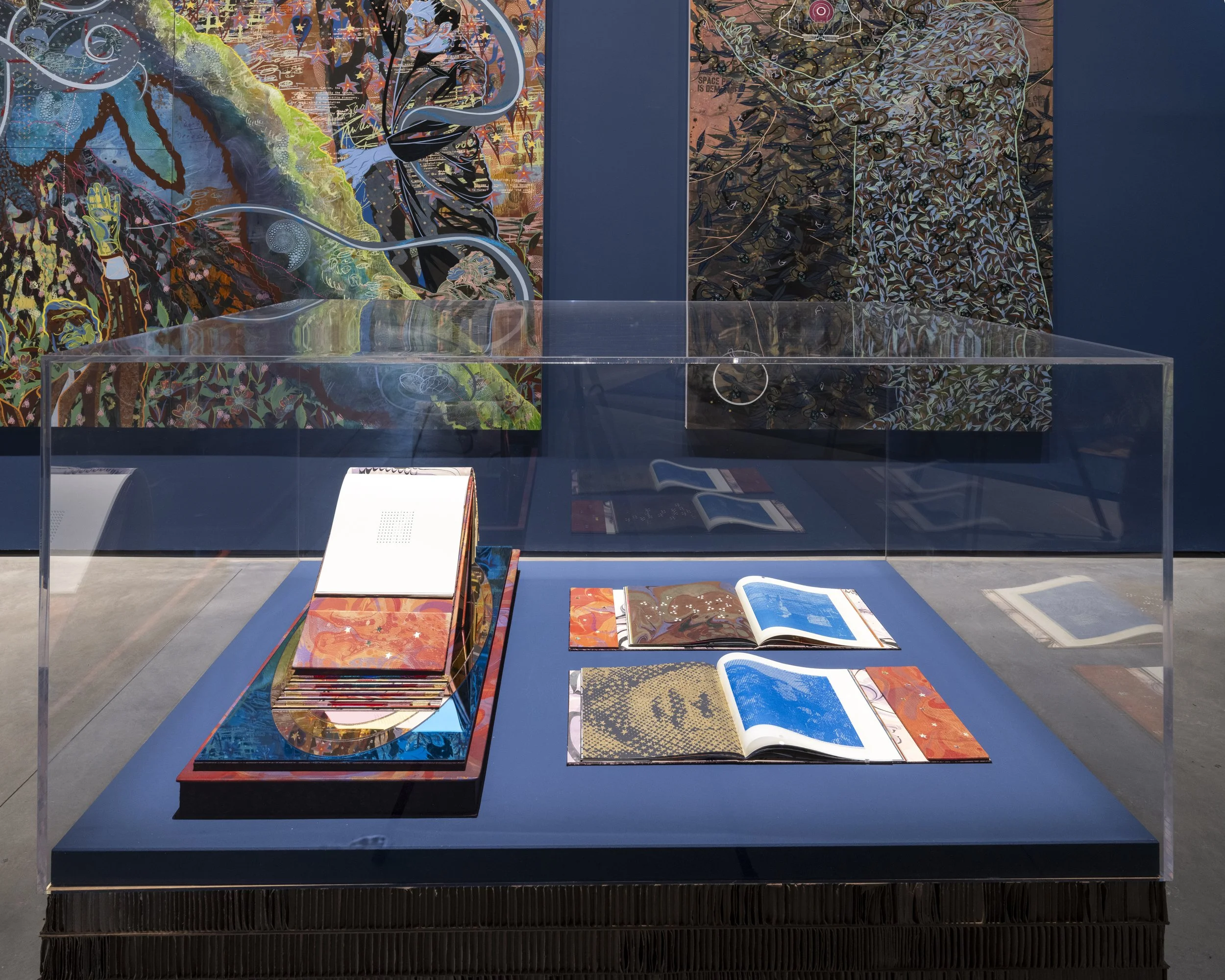
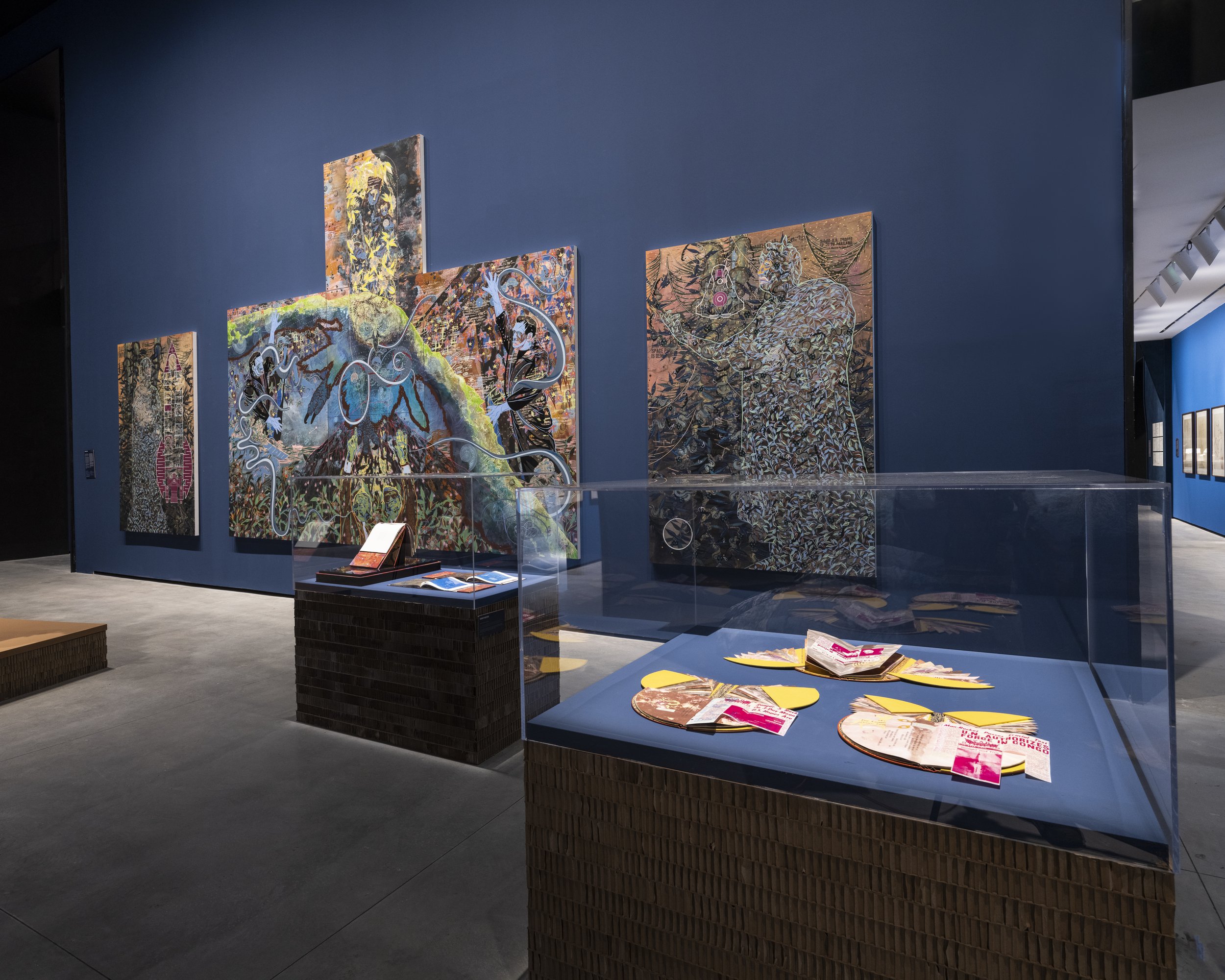
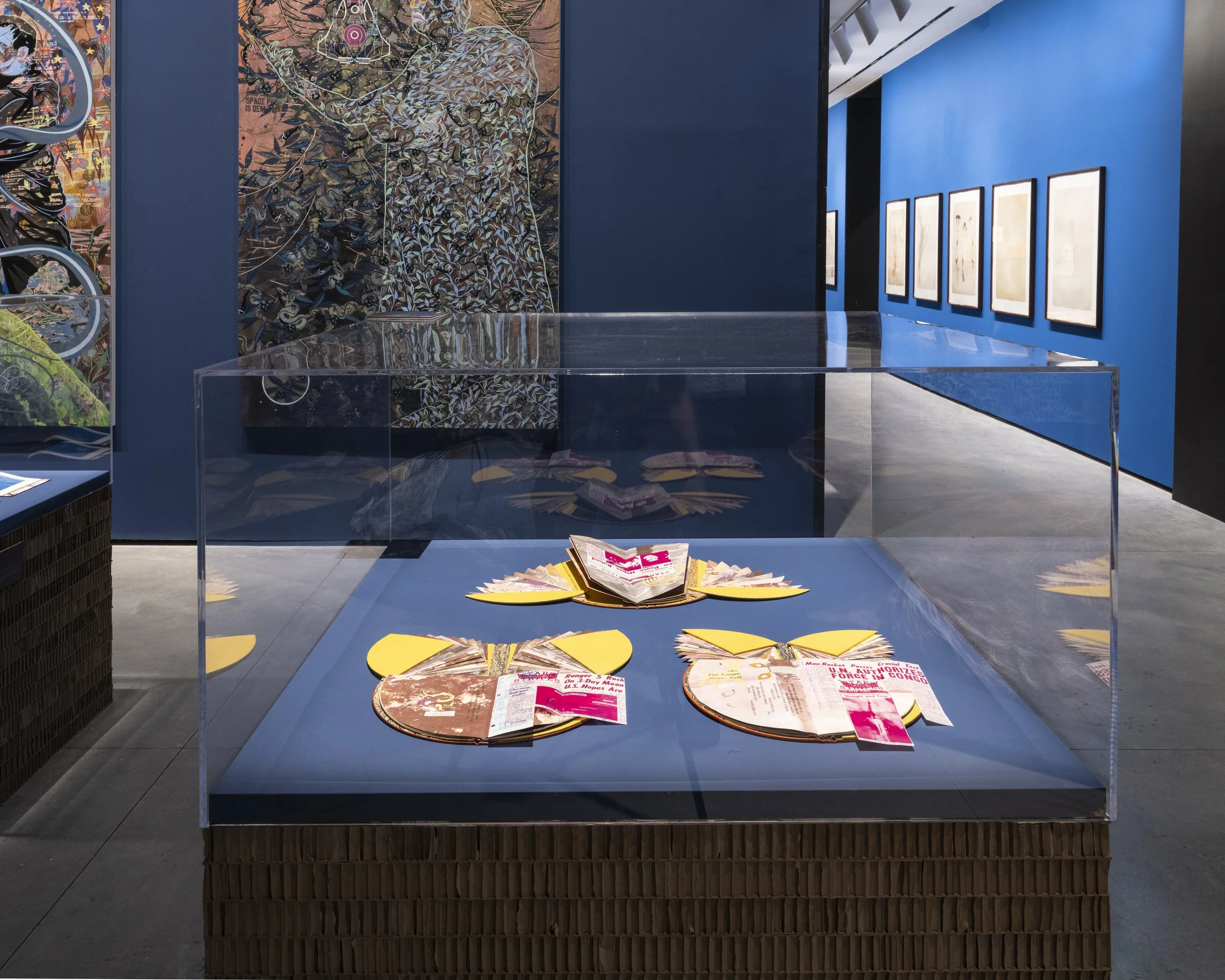
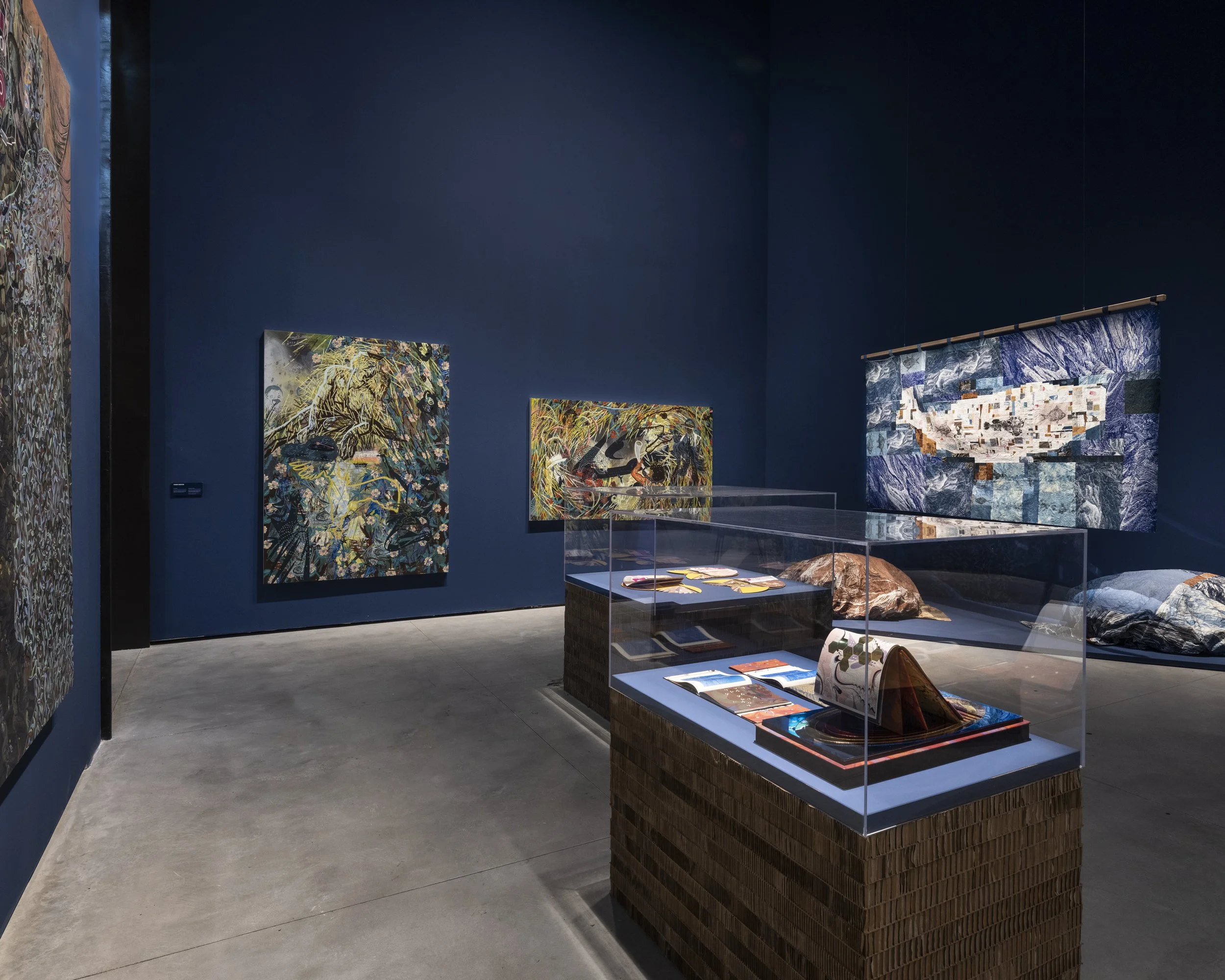
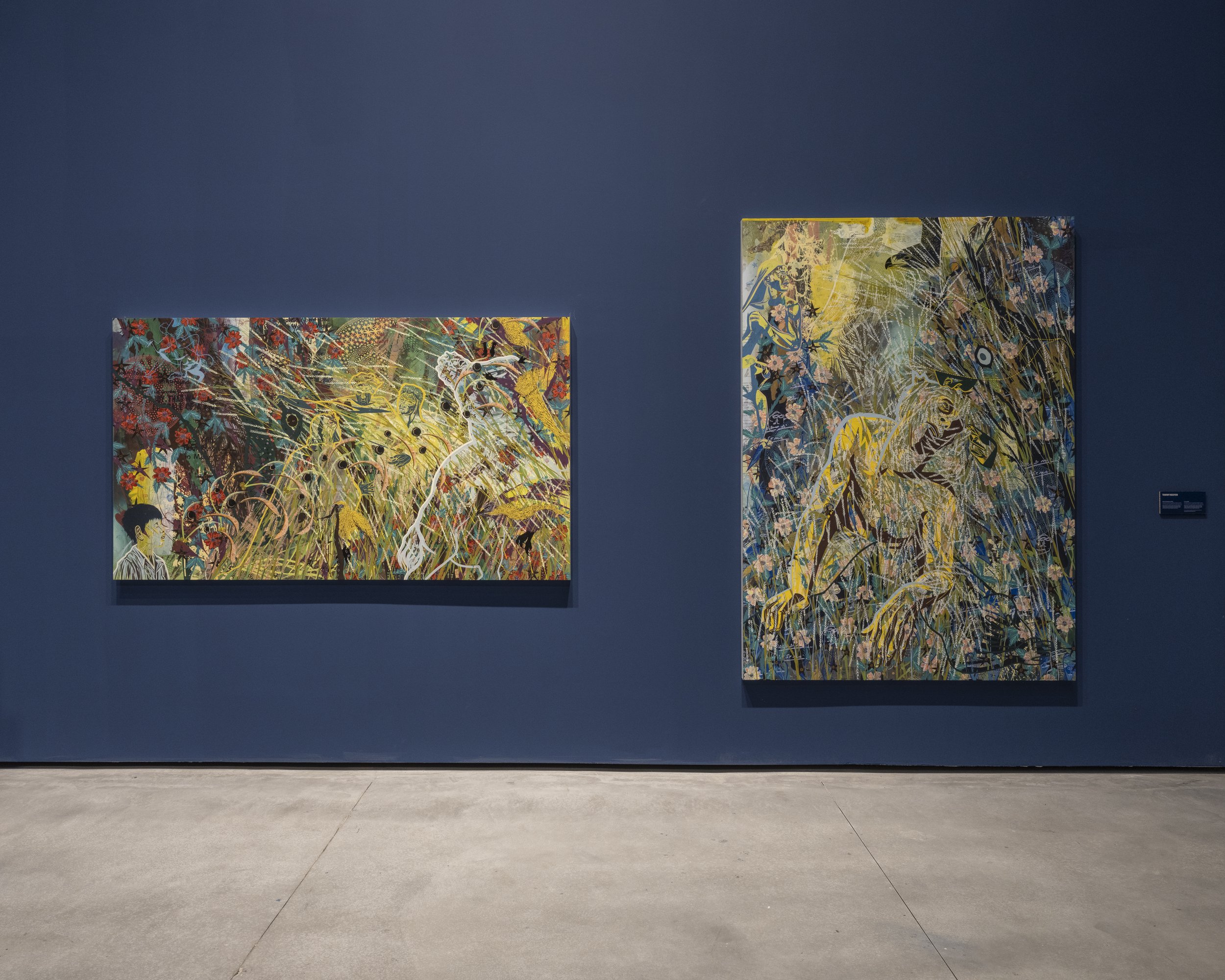
Symmetry is key to Nguyen’s presentation in In Minor Keys. This presentation includes four new paintings made for the exhibition, as well as three paintings and several artist books previously exhibited in Nguyen’s A Comedy for Mortals series of shows. The arrangement of these works, their dimensions, and their content are all thinking about the structures of a house of god, world order, systems of faith, and systems within society.
Formally, the four new paintings begin with the swirl. Swirls and the Fibonacci spiral are a theme in Plato’s Timaeus and in all of Tammy’s ongoing work about the Timaeus, and this relates to this sense of systems and symmetry throughout the works. They are a structure that represents the sublime, infinity, truth, and orbits.
Nguyen’s paintings are lush and rich with wildlife. Luna moths, another recurring element in Nguyen’s paintings, represent the collapse of the micro and macro by being both insects and symbols of planetary cycles. Eagles can be found embedded within the works, referencing notions of divine justice and calling back to Nguyen’s engagement with The Divine Comedy by Dante Alighieri. The flowers in these works, wild roses and star flowers, are symbolic. Wild roses are used in Dante’s Paradiso and in these works to represent the domain of God and the souls of the blessed in the Empyrean, part of the structure of Dante’s Heaven. The star flowers oscillate between a national symbol, the star of nature, and a symbol of the celestial heavens.
Nguyen became interested in The Divine Comedy because it is a Christian story in which Dante seeks a kind of spiritual clarity by following Virgil, a Pagan, who knows Christ is coming. Nguyen continues to probe at this provocative tension. The four new paintings created for this exhibition all started out with inspiration from the opening scene in The Divine Comedy: Purgatorio, where Dante finds himself on the shores of Mount Purgatory covered in the soot of Hell. In this story, Virgil takes the grass from Mount Purgatory and wipes Dante’s face with it. After Virgil washes Dante’s face, “the humble plant, even such did it instantly spring up again, there whence he had uprooted it” (Purgatorio I.134-136). This regenerative power of reeds in Purgatorio is why the grasses in these paintings are depicted as wheat – wheat gets at the idea of something generative, something that lives on and feeds others. Nguyen has related this moment of Virgil wiping Dante’s face to the story of Jesus’s face being wiped by Mary Magdalene and his impression being left on the cloth, a story Nguyen previously depicted in her presentation of paintings about the Stations of the Cross. The paintings Ah, me and O, me interpret this relation by telling the story of Dante and Virgil in this moment through the images of Christ and Veronica.
O, Me, 2026
Ah, Me, 2026
Cross the Circle, 2026
Here is the Way Up, 2026